"B2B brands should be safe. Navy blue, corporate, professional. Don't be weird."
That's what a well-meaning advisor told me when I was designing GRODE's logo.
I did the opposite.
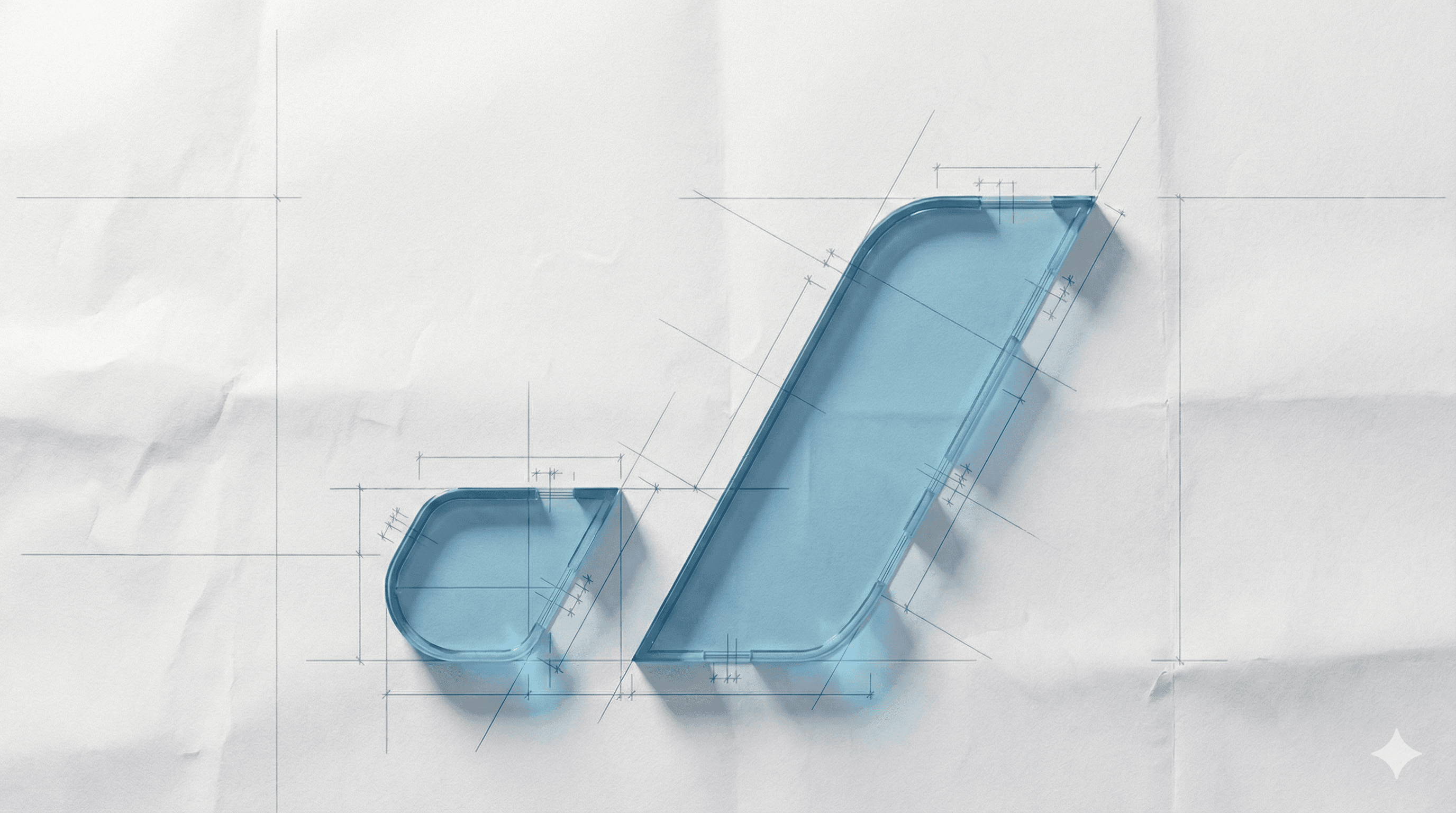
Made it a Tamil letter வ (va) in bright orange on navy blue.
"Too niche," they said. "B2B buyers won't care about Tamil linguistics. You're limiting yourself."
Three months later:
100% of prospects remember us after one call
Every discovery call starts with "tell me about your logo"
Zero confusion about who we are or what we stand for
We charge premium rates because we're not compared to 50 identical agencies
Our "weird" choice became our strongest competitive advantage.
Here's the story of how it happened—and why cultural design works better than playing it safe.
The Problem With How Most Logos Are Designed
Most startup logos fail quietly.
They look fine. They follow trends. They feel "modern."
But they don't help anyone inside the company make better decisions, and they don't help anyone outside the company remember who you are.
Over 9+ years in creative leadership, I've seen a pattern:
Logos designed before the product direction is clear
Visual identity created in a vacuum, disconnected from what the company actually does or believes.
Visuals chosen because they resemble successful companies
"Can we make it look like Stripe?" / "Something minimal like Apple."
Minimalism used as a shortcut for meaning
Remove everything until it's "clean" but empty.
The result is a symbol that decorates, but doesn't differentiate.
Walk through any B2B SaaS website and you'll see:
Abstract geometric shapes (circle, triangle, hexagon)
Sans-serif wordmark in lowercase
Navy blue or teal color palette
Could belong to literally anyone
When branding is treated as aesthetics instead of alignment, it rarely lasts. This is exactly why B2B brands need personality-differentiation comes from authentic identity, not generic visuals.
And more importantly, it doesn't help you stand out in a market where everyone looks identical.
Why GRODE Started at Zero
GRODE didn't begin with a logo.
It began with a problem I'd been observing for years: the breakdown between design and marketing teams.
Design teams would create beautiful assets.
Marketing teams would push campaigns without visual clarity.
Nothing connected. Campaigns failed. Everyone blamed each other.
After leading creative at companies like Moxo and Accenture, I'd seen this pattern destroy otherwise good work. Beautiful design that didn't convert. Smart marketing with weak creative. Silos everywhere.
GRODE was born from this frustration: What if design and marketing worked as one integrated system from day one?
Before I could think about symbols, I needed clarity on what GRODE actually stood for.
The idea of starting at "0" came from that place.
No inherited assumptions.
No borrowed visual language.
Just first principles.
Zero wasn't emptiness.
Zero was intention.
The Decision: Safe or Authentic?
October 2024. I'm sitting with my notebook, sketching logo concepts for GRODE.
I have two paths:
Path A: Play It Safe
Generic geometric mark (everyone does this)
Navy blue (corporate credibility)
Minimal wordmark
Looks like every other B2B agency
Won't offend anyone
Won't be remembered by anyone
Path B: Be Authentic
Use something from my actual identity
Take a risk
Stand for something specific
Might alienate some people
Might be exactly what makes us memorable
The advisor's voice was in my head: "Don't be weird. B2B buyers want safe."
But I'd spent 9 years watching "safe" brands blend into wallpaper.
I chose authenticity.
Why Tamil, and Why வ
I'm from Madurai, Tamil Nadu.
Tamil isn't just the language I grew up with—it's the lens through which I first understood design, storytelling, and structure.
When I started thinking about what symbol could represent GRODE's philosophy, I kept coming back to one letter: வ (pronounced "va").
Here's why:
1. It Represents Both Growth and Design
In Tamil:
Growth = வளர்ச்சி (Valarchi) - starts with வ
Design = வடிவமைப்பு (Vadivamaippu) - starts with வ
One symbol. Two disciplines. Integrated from the start.
That's literally what GRODE does—we don't separate growth and design. They're the same conversation.
2. It Suggests Movement and Direction
The letter வ isn't static.
Look at the shape: two ascending strokes moving forward and upward. It suggests progression, momentum, trajectory.
For me, it represented how GRODE approaches work:
Start from fundamentals
Move forward with intent
Stay connected to where you came from without being stuck there
3. It's Grounding Without Being Limiting
Choosing Tamil wasn't about nostalgia or playing to a specific market.
It was about having a story that's actually true.
When prospects ask "What does that symbol mean?" I'm not making up some abstract connection to "innovation" or "synergy." I'm sharing something real about where I come from and how it shapes how GRODE thinks.
Authenticity is magnetic.
Generic positioning is forgettable.
Turning Meaning Into Form
Once the intent was clear—Tamil வ representing integrated growth and design—the design decisions became easier.
But I had constraints:
It had to work across product interfaces
From app icons to pitch decks to business cards.
It had to scale from 16x16px to billboard size
Detail that disappears at small sizes doesn't work.
It had to survive long-term use, not just launch day
No trendy effects that age badly in 18 months.
It had to feel professional while being distinctive
B2B buyers need to trust us, not just think we're "cool."
Design Decisions:
Color:
Navy (#0A1F44): Trust, professionalism, stability (B2B credibility)
Orange (#FF6B35): Energy, growth, forward momentum (not just another blue agency)
Form:
Abstracted the Tamil வ enough to be universal
Kept the ascending diagonal strokes (growth trajectory)
Maintained the rounded curve at bottom left (authentic to Tamil script)
Removed unnecessary detail
Made it geometric enough to work at any size
Container:
Navy rounded square (modern, app-friendly)
Orange symbol pops against dark background
Clean wordmark in sentence case (Grode, not GRODE)
Every line, balance decision, and negative space choice came back to one question:
Does this help GRODE stay clear, or does it add noise?
Anything decorative was removed.
Anything trendy was avoided.
The goal wasn't to impress designers. It was to last a decade.
Why the Logo Is Intentionally Quiet
Loud logos chase attention.
Quiet logos build trust.
GRODE doesn't need to shout. The work should speak.
A restrained logo reflects confidence. It signals that value doesn't come from surface-level cleverness, but from depth and consistency.
That same belief runs through how we approach client work:
We don't over-design to prove we can
We don't follow trends to look current
We don't add complexity to justify our fee
We solve problems. The design serves the goal.
The GRODE logo does the same—it exists to identify and differentiate, not to perform.
What Actually Happened After Launch
October 15, 2024: GRODE officially launches with the Tamil வ logo.
I'll admit there was anxiety. What if the advisor was right? What if B2B buyers see it and think "this isn't for me"?
Here's what actually happened:
Every single discovery call started with "I have to ask—what does your logo mean?"
The conversation would turn into a 3-minute story about integration, Tamil, and intentional design. Zero confusion. Zero negative reactions. Prospects said "I've never forgotten a logo story before."
Within three months:
100% recall rate - Prospects remembered us weeks later as "the agency with the Tamil logo"
Self-selection - Companies valuing authenticity reached out; generic "cheapest option" inquiries stopped
Premium positioning - No commodity pricing pressure, no "what's your rate?" conversations
Cultural connection - Tamil professionals appreciated the representation; international clients saw it as thoughtfulness
Social proof - Every LinkedIn post with the logo got engagement and questions
The unexpected benefit: The logo story breaks the ice immediately. Prospects feel they know something personal about me before we even discuss work. Trust builds faster when you share something real.
The advisor was wrong.
Being "weird" wasn't limiting. It was liberating.
Why This Works in B2B (And Why "Safe" Fails)
Here's what most B2B founders misunderstand:
B2B buyers are humans making decisions, not procurement robots executing algorithms.
They remember stories.
They trust authenticity.
They choose brands that feel different.
Most B2B founders work with design agencies that don't understand marketing, resulting in beautiful brands that don't convert.
When you look like everyone else, you compete on price.
When you have a distinct identity, you compete on value.
The GRODE Logo Does Three Things:
1. Makes Us Memorable In a sea of navy-blue geometric logos, we stand out.
Not because we're flashy, but because we're specific.
Prospects evaluating 10 agencies remember "the one with the Tamil symbol." They forget "the one with the triangle" and "the one with the hexagon."
2. Shows Intentionality The fact that every design choice has a reason from the color to the shape to the cultural connection signals how we work.
If we think this deeply about our own logo, prospects trust we'll think deeply about their brand.
3. Builds Human Connection When I share the Tamil வ story, I'm sharing something personal.
That vulnerability creates connection. Connection creates trust. Trust creates deals.
Generic positioning creates nothing.
What This Logo Is (And Isn't)
This logo is:
A marker of intent and philosophy
A foundation for a larger brand system
A reminder of how GRODE thinks (integrated, intentional, authentic)
A differentiation tool in a commodity market
A conversation starter that builds relationships
This logo is not:
A branding flex or design award submission
A shortcut to growth (work still matters most)
A trend artifact that will age badly
An attempt to appeal to everyone
It's a starting point, not a statement piece.
Designing for the Next 10 Years
Trends fade quickly. Principles don't.
The GRODE logo was designed to evolve without breaking—to remain relevant as the company grows, without needing reinvention every few years.
Because a brand isn't a logo.
A logo is just one component of a system.
The logo can expand into:
Motion graphics (the ascending strokes animate naturally)
Iconography system (based on Tamil letterforms)
Pattern library (variations of வ for different contexts)
Cultural storytelling (more depth to explore)
But the core remains constant: growth and design, integrated.
What This Process Changed for Me
Designing GRODE's logo forced clarity.
It made me slow down.
It made me define standards more clearly.
It made me more patient with decisions that actually matter.
That alone made the process worth it.
But more importantly, it taught me this:
Playing it safe is the biggest risk.
Being forgettable in a crowded market means losing deals to whoever prospects actually remember.
Being authentic—even if it feels "weird"—is what makes you memorable.
The Lesson: Cultural Design Beats Generic Design
If I could go back and give myself advice in October 2024, I'd say:
"Ignore the people who tell you to play it safe.
Use your actual story. Your actual heritage. Your actual beliefs.
Not because it's a marketing tactic, but because it's true.
B2B buyers are tired of brands that all look the same.
They're looking for someone who stands for something specific.
Your cultural identity is your competitive advantage—not a limitation."
But here's the critical caveat:
This only works when it's authentic.
Cultural design fails when it's forced, decorative, or performative. If you're borrowing cultural elements because they "look cool" or feel "exotic," it will backfire. People can sense inauthenticity immediately.
The Tamil வ works for GRODE because:
It's actually my heritage (not borrowed)
It connects to our philosophy (not decoration)
I can tell the story naturally (not rehearsed)
Don't force cultural elements into your brand if they're not genuinely part of your story. But if they are? Don't hide them because someone says "play it safe."
Authenticity—cultural or otherwise—is what makes brands memorable.
From 0 to வ Is How GRODE Works
GRODE starts from first principles.
Meaning comes before visuals.
Clarity beats cleverness.
Authentic beats generic.
This isn't just how we designed our logo. It's our integrated design and marketing approach to every client project.
If you're building something for the long term and want design rooted in thinking—not trends—GRODE might be a good fit.
Want to see how we combine cultural authenticity with modern efficiency? Learn about our AI-enhanced design workflow that generates 40% faster results.
Your Brand Deserves Better Than "Safe"
Most B2B brands fail not because they make bold choices, but because they make no choice at all.
They look like everyone else. Sound like everyone else. Compete on price because there's nothing else to compete on.
If you're tired of being forgettable, let's talk.
Book a Brand Strategy Session →
We'll discuss:
What makes your company actually different (not generic positioning)
How to translate that into visual identity
Whether cultural or personal elements could strengthen your brand
How to build a brand system that lasts 10+ years
No cookie-cutter frameworks. No borrowed ideas.
Just intentional design rooted in who you actually are.
About the Author
Ram Prakash is the Founder and Creative Director of GRODE, an integrated design and growth marketing agency for B2B SaaS companies. Born in Madurai, Tamil Nadu, Ram brings cultural depth and 9+ years of creative leadership experience (including roles at Moxo Solutions and Accenture) to building brands that differentiate through authenticity rather than trends. GRODE's approach combines strategic design thinking with growth marketing execution, serving companies that want both beautiful creative and measurable results. Based in Bangalore, India.